This newsletter is going to be short and sweet because, well, you know.
For you below, I have: writing updates (sparse)! Book recs (also sparse but meaningful)! And a poem I wrote because there’s been so much weighing on my mind lately, and poetry is a good way to get those thoughts out on paper. It might even feel relatable to some of you, and if so, I’m sorry.
I’m hoping for better times for all of us, and if you’re struggling, I see you. And if I seem angry in this newsletter in particular, well.
Writing
In Progress
Book! Everything is book! Want to finish book, book is life, book is love (except it’s not because it’s very hard to finish a book but whatever, let me have this)
Mostly I’ve been having to stop myself from writing a PWHL hockey romance that’s on my mind. First, I must finish the other book. I shall not think about hockey lesbians. Hockey lesbians are the mindkiller.
Two Books for The Times
There are a lot of really pertinent, beautiful commentaries on politics coming out of the decline of U.S. hegemony, which we’re watching happen in real time whether we’d like to or not. I’m a fairly big nonfiction reader and have a background in political science, believe it or not, and this month in lieu of short story recs (partly because I’ve barely read anything other than the OTHERSIDE slush) I thought I’d mention two books that are relevant for The Times We’re Living In if you’re also interested in nonfiction.
First, “One Day, Everyone Will Have Always Been Against This” by Omar El Akkad. Omar is an American by way of Canada, by way of Qatar, by way of Egypt, and he’s been a celebrated journalist for many years now, with several award-winning books under his belt.
This book, written in beautiful and arresting prose, is his own grappling with the genocide in Palestine and his upbringing in a neighbouring country, in contrast to the relative security he feels in North America. He doesn’t mince words when he talks about neo-liberal policies of the West and a culture of comfort; that the genocide in Palestine has been largely uninteresting to Westerners because it’s happening to people over there, who probably did something bad, or thought about doing something bad sometime maybe.
His main theme comes in near the end, this idea that one day we’ll discuss the genocide in history books and agree that it was a terrible atrocity, but right now, as it happens live on twitter and youtube in front of us, we ignore it for the sake of not experiencing discomfort and helplessness. It’s not a hopeful book, but it is an excellent reflection of several complex issues and he weaves it all together with stories of his own family.

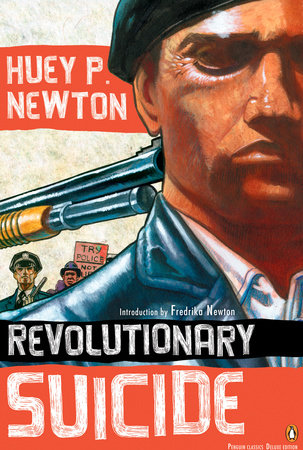
The next, and one you might not have heard of, is “Revolutionary Suicide” by Huey P. Newton, a memoir from one of the founding members of the Black Panthers.
I read this book years ago, but it’s been on my mind a lot as I finished Omar El Akkad’s book because there were a lot of parallels. American history, and North American history more generally, memorialises Dr. Martin Luther King Jr. as a peaceful and loving activist, and celebrate him as a beloved figure and a champion of civil rights in the U.S. This is all at least partly true, but what is conveniently forgotten when his story is told now is that he was outright hated by a huge portion of the population, and especially by the government.
Dr. King was arrested almost 30 times in his life, and was eventually murdered by an assassin hired by the U.S. government (the DOJ says this is debatable but, well. Look at what they’ve done lately.)
The other side of the coin, as it’s always presented, were the Black Panthers. Violent, militaristic, the antithesis to Dr. King and his teachings. There were ideological differences between the two groups, but when you see in Huey P. Newton’s own words what they were doing and what they were committed to, it paints a very different and important picture of the role the Black Panthers played in both the civil rights movement more broadly and in a more targeted way in Oakland.
Some of the initial actions taken by the Black Panthers, the pictures of them that became iconic, were simply arming themselves against a corrupt police force that continually harassed their communities with guns. So the Panthers exercised their right to open carry. They weren’t seeking violence outright, but committing themselves to what he calls in his manifesto ‘revolutionary suicide’ (as opposed to ‘reactionary’ suicide).
It’s well worth a read if you’re interested in the history of civil rights in the West, but it also feels especially relevant and prescient given, you know, everything.
Poetry, Also for The Times

📚 Reading
The River Has Roots by Amal El-Mohtar
📺 Watching
The Pitt Season 2 (I watch this like I’m Dr House, I’m studying bugs in a jar okay)
🎵 Listening To
anything by Jesse Welles, but especially this one
